If you walk into a classroom today and compare it to one from ten years ago, the difference isn’t always obvious at first glance. There are still desks, blackboards (or smartboards now), and the familiar hum of students talking. But look a little closer, and something has shifted.
A student revises a lesson on a tablet. Another joins a class remotely from a different city. Homework isn’t just in notebooks—it lives in apps, shared folders, and sometimes, in voice notes sent late at night.
Education in India is quietly transforming. Not with a loud announcement, but with small, steady changes that are beginning to reshape how learning actually feels.
When Online Met Offline
The pandemic might have accelerated digital learning, but it didn’t invent it. What it did, though, was push schools, teachers, and parents into experimenting—sometimes reluctantly—with new formats.
Now that traditional classrooms are fully open again, something interesting has happened. Schools didn’t completely abandon digital tools. Instead, they started blending them with physical teaching.
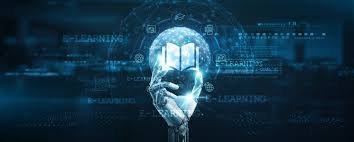
That’s where The Future of Hybrid Learning in Indian Schools begins to take shape—not as a replacement for classrooms, but as an extension of them.
Flexibility That Actually Helps
One of the biggest advantages of hybrid learning is flexibility. Students who miss a class can catch up online. Recorded lessons give them a second chance to understand difficult topics. And for competitive exam preparation, this becomes a huge plus.
But it’s not just about convenience. It’s about pace.
In a traditional classroom, everyone moves at roughly the same speed. Hybrid models allow students to pause, rewind, revisit. It gives slower learners breathing space and faster learners room to explore more.
That kind of adaptability was rare before.
Teachers Are Learning Too
It’s easy to focus on students, but teachers are navigating this shift just as much—maybe even more.
Teaching in a hybrid setup isn’t just about explaining concepts. It involves managing digital tools, engaging students both online and offline, and constantly adjusting methods.
Some teachers have embraced it wholeheartedly, experimenting with videos, quizzes, and interactive platforms. Others are still finding their footing, and that’s okay. Change takes time, especially in a system as vast as India’s.
The Digital Divide Still Exists
Of course, it’s not all smooth.
One of the biggest challenges remains access. Not every student has a stable internet connection or a personal device. In rural areas, even electricity can be inconsistent. Hybrid learning, in such cases, risks widening the gap rather than bridging it.
This is where policy, infrastructure, and community support become critical. Without addressing these issues, the benefits of hybrid education won’t reach everyone equally.
Beyond Textbooks: A Different Kind of Learning
Hybrid learning isn’t just about moving lessons online. It’s also about expanding what learning looks like.
Students today can watch experiments, attend virtual workshops, or even interact with educators from across the country. Exposure has increased in ways that were hard to imagine earlier.
And sometimes, this makes learning feel less like a task and more like discovery.
Attention Spans and Distractions
Let’s be honest—screens come with distractions. Notifications, social media, games… it’s all just a tap away.
Maintaining focus in a hybrid environment can be tricky. Some students thrive with digital tools, while others struggle to stay engaged.
That’s why balance matters. Too much screen time can be overwhelming, but avoiding technology altogether isn’t practical either. Finding that middle ground is something schools are still figuring out.
Parents as Silent Participants
Another subtle shift is the role of parents. With online components in education, parents often become more involved—sometimes intentionally, sometimes just by being around.
They get a closer look at how their children learn, what they struggle with, and where they excel. It’s a mixed blessing, though. While involvement can help, too much interference can create pressure.
Still, the connection between home and school feels stronger now than it did before.
What Lies Ahead
So where does all this lead?
Hybrid learning in India isn’t a finished system. It’s still evolving—shaped by technology, policies, and everyday classroom experiences. Some schools will adopt it fully, others partially, and some might stick closer to traditional methods.
But one thing is clear: the idea of learning being confined to four walls is fading.
Final Thoughts: A Work in Progress
Maybe the most honest way to look at hybrid learning is this—it’s a work in progress. Not perfect, not complete, but full of potential.
For students, it offers more ways to learn. For teachers, more ways to teach. And for the education system as a whole, a chance to rethink what truly works.
It’s not about choosing between online or offline anymore. It’s about making them work together, in a way that feels natural, effective, and inclusive.
And if that balance can be achieved, even imperfectly, the future of learning in India might turn out to be far more dynamic than we ever expected.

Admin
A contributor to Blognary’s independent wall of business, technology, finance and marketing perspectives.
VIEW ALL ARTICLES