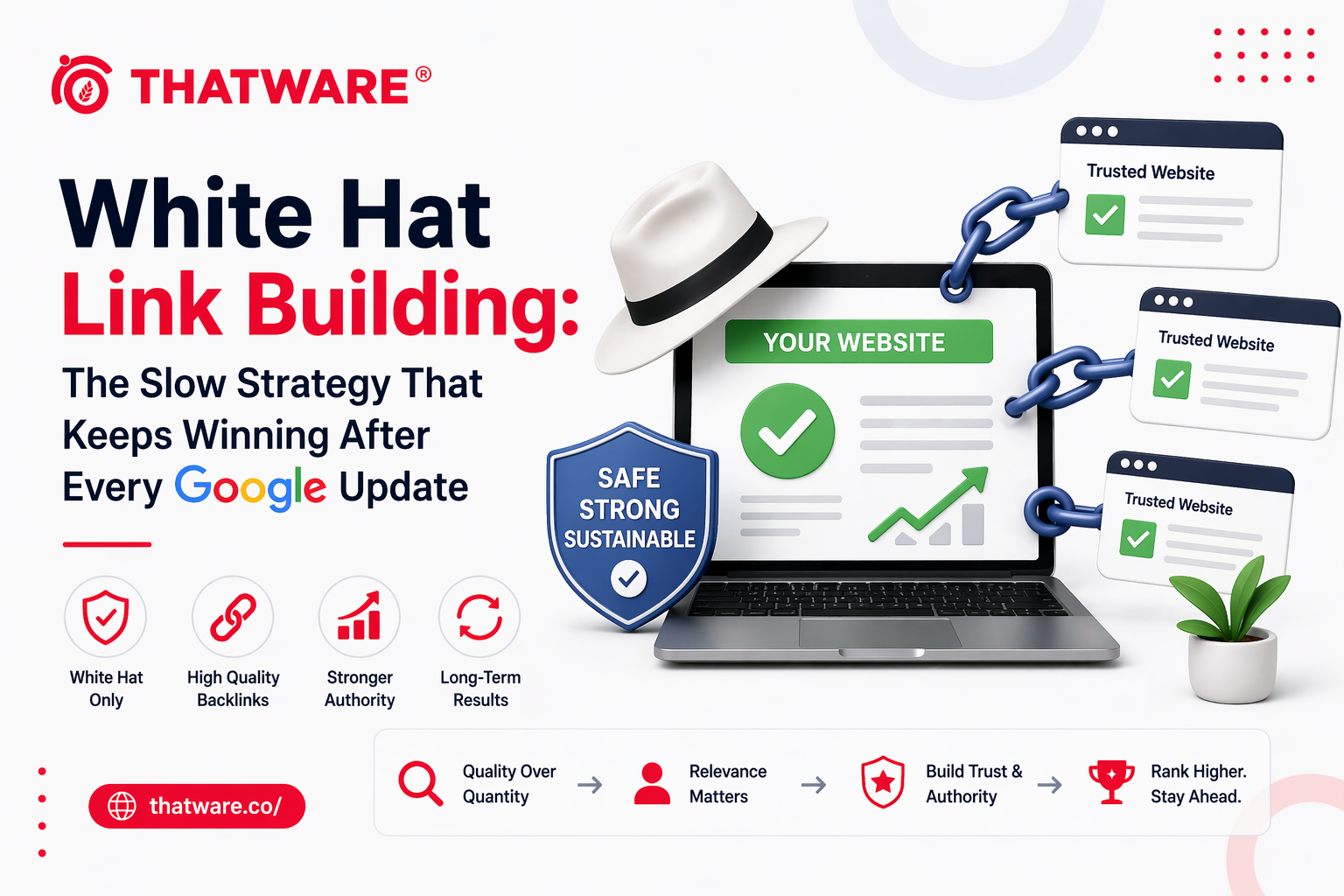
Every time Google rolls out a significant algorithm update, there’s a predictable wave of panic in SEO forums. Rankings shuffle. Some sites drop hard. Others barely notice. And if you look at the patterns long enough, a pretty consistent picture emerges: the sites that tank are usually the ones that were leaning on manipulative link profiles, and the sites that hold or improve are almost always the ones that had been building links the boring, legitimate way.
This isn’t a coincidence. It’s Google’s system working roughly as intended.
The irony is that white hat link building has a reputation for being slow and unsexy. And it is slower than buying links in bulk or running an aggressive private blog network. But it’s the only approach that actually compounds over time without accumulating existential risk. Every other strategy is eventually a liability.
Why Links Still Matter So Much
Before getting into the how, it’s worth understanding the why, because this sometimes gets lost in conversations about newer ranking factors.
Links are essentially votes of confidence from one website to another. When a credible, relevant site links to your content, it’s telling Google that your resource was useful or authoritative enough to be worth pointing readers toward. The more of these votes you accumulate from trustworthy sources, the stronger your site’s authority becomes in the eyes of search engines.
This has been true for over two decades, and while the sophistication of how Google evaluates links has grown enormously, the fundamental signal hasn’t been replaced. Content quality, topical authority, and user experience signals have all grown in importance, but a strong link profile from genuinely relevant sources remains one of the most powerful ranking inputs a site can have.
The question is how you build that profile in a way that doesn’t eventually blow up in your face.
What White Hat Actually Means in Practice
The phrase gets used loosely sometimes, so it’s worth being specific. White hat link building means earning links through methods that Google would consider legitimate if they knew exactly what you were doing. Which, increasingly, they do.
This includes things like creating genuinely useful resources that people in your industry want to share and reference. It includes digital PR, getting your brand and expertise covered in publications your audience reads. It includes broken link building, finding dead resources and offering your content as a replacement. It includes strategic outreach to relevant sites where a partnership or mention makes genuine editorial sense.
What it doesn’t include: paying sites for links without disclosure, link exchanges that exist only for SEO purposes, publishing content on networks of sites designed to pass link equity artificially, or anything else that only makes sense if you’re trying to game a ranking system rather than provide value.
A solid white hat link building program is built on the premise that the links you earn should be ones that would exist even if they had zero SEO value, because they genuinely point readers toward something useful.
The Compounding Nature of Authority
Here’s the thing about link building that the short-term thinkers miss. Authority compounds. A site that has been steadily earning high-quality links for three years has a genuinely different starting point than a site that just launched, and that gap is hard to close quickly.
This is actually good news for businesses that are thinking long-term. The work you put into link building today doesn’t just help you rank for your current target keywords. It raises the baseline authority of your entire domain, which makes every new page you publish start from a stronger position. It also makes you more resilient to algorithm updates, because your rankings are based on a broad, legitimate link profile rather than a few manipulative tactics that Google is constantly working to devalue.
The flip side is that shortcuts have consequences that compound too. A site that builds its rankings on purchased links or manipulative schemes might look fine for months or even years. But the risk keeps accumulating, and when the correction comes, it tends to be severe and hard to recover from.
What Good Link Building Actually Looks Like
For most businesses, a realistic link building strategy involves a few different tracks running in parallel.
Content worth linking to is the foundation. If your site doesn’t have resources, data, tools, or perspectives that someone would genuinely want to reference, outreach will be an uphill battle regardless of how good your pitches are. Investing in content that has real informational depth or offers something unique creates the asset that the rest of the strategy promotes.
Digital PR and media relationships are often underutilized. Getting mentioned as an expert source in industry coverage, contributing original research or data that journalists find useful, positioning your leadership as thought leaders in specific topic areas, these activities build links and brand simultaneously.
Strategic outreach, done properly, still works. The key word is strategically. Spray-and-pray email campaigns to irrelevant sites produce almost nothing. Personalized, contextually relevant outreach to sites where a link genuinely adds value to their readers produces a different result.
Choosing the right link building services partner means finding someone who understands all of these tracks and knows which combination makes sense for your specific industry and competitive situation.
The Updates Will Keep Coming
Google has been running large-scale link spam updates for years now, and the trajectory is clear. The algorithms are getting better at identifying patterns that indicate manipulation, and the penalties for getting caught have become more severe and harder to recover from.
The businesses that are least worried about this are the ones that were never gambling in the first place. They built their link profiles on real relationships, real content, and real editorial value. When the updates hit, they often don’t notice, or they actually improve as their manipulative competitors lose ground.
That’s the quiet, unsexy, deeply practical argument for white hat link building. It’s not just the ethical choice. It’s the one that still works after every update, and the one that keeps working five years from now.

Admin
A contributor to Blognary’s independent wall of business, technology, finance and marketing perspectives.
VIEW ALL ARTICLES