There are some household problems that announce themselves loudly. A leaking pipe is one. A broken water heater is another. Hard water, on the other hand, tends to sneak into your routine.
You notice white spots on the shower glass. The faucet develops a crusty ring. Your freshly washed clothes don’t feel quite as soft. Maybe the soap in the bathroom seems to disappear before it produces a decent lather.
None of these things feels like a disaster. Still, after months or years, they can become surprisingly frustrating.
Hard water is common in many areas, and understanding what causes it can make choosing a treatment much easier. A water softener isn’t necessarily something every home needs, but for households dealing with significant hardness, it can make a noticeable difference.
What Exactly Is Hard Water?
Hard water contains elevated levels of naturally occurring minerals, particularly calcium and magnesium.
These minerals typically enter groundwater as water moves through soil and rock. Because groundwater spends considerable time underground, it can dissolve minerals along the way and carry them into wells and water supplies.
Hardness isn’t automatically a sign that water is unsafe. In fact, calcium and magnesium are minerals the body needs. The problem is more about what happens when those minerals accumulate around your plumbing and appliances.
That’s where the everyday frustrations begin.
The Telltale Signs Around Your Home
One of the easiest ways to recognize hard water is by looking at your fixtures.
You may see cloudy spots on glasses, white deposits around faucets, or a chalky film inside kettles and coffee makers. Showerheads can become clogged with mineral deposits, while bathroom surfaces may require more frequent scrubbing.
Over time, Hard water can cause scale buildup inside plumbing and water-using appliances. That buildup can become particularly troublesome in water heaters, where mineral deposits may accumulate on internal components.
The result isn’t necessarily an immediate breakdown. Instead, performance can gradually decline, which makes the problem easy to overlook.
How Water Softeners Actually Work
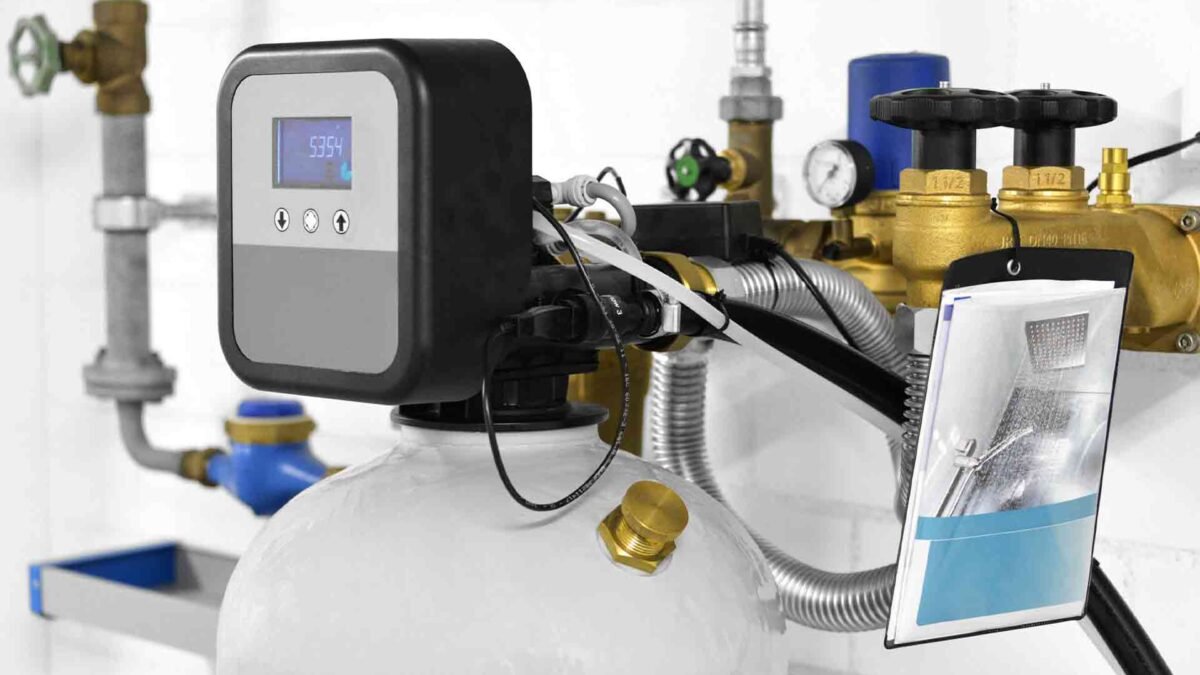
If hard water is causing persistent problems, Water Softener Systems can provide a targeted solution.
Traditional water softeners generally use a process called ion exchange. Water passes through resin beads that attract calcium and magnesium ions. In exchange, the resin releases sodium or, in some systems, potassium ions.
The treated water then contains much less hardness.
Eventually, the resin becomes loaded with minerals and needs to be regenerated. In a conventional salt-based softener, this involves a regeneration cycle using a brine solution.
It’s a fairly clever bit of chemistry hidden inside what looks like a simple household appliance.
What Changes After Softening?
The difference can be gradual at first.
Soap and shampoo may lather more easily. Glassware can come out of the dishwasher with fewer mineral spots. Shower surfaces may be easier to clean, and faucets may stay free of crusty deposits for longer.
Laundry can also feel different. Hard water can interfere with how detergents work, so softer water may allow soaps to rinse more effectively.
And then there’s the appliance side of things. Reducing hardness can help limit scale formation inside water heaters, dishwashers, washing machines, and other equipment that regularly uses water.
What a Water Softener Doesn’t Do
This part is important.
A water softener is designed primarily to address hardness. It isn’t a universal water purifier.
If your water contains bacteria, arsenic, nitrates, excessive sediment, or other specific contaminants, a softener isn’t necessarily the appropriate treatment.
Likewise, if your biggest complaint is chlorine taste, a carbon filter may be more suitable.
This is why water testing is such a useful first step. Once you know what you’re dealing with, you can select equipment for the actual problem rather than trying to make one system do everything.
Salt-Based vs. Salt-Free Options
Traditional softeners use salt during regeneration, which can be perfectly practical for many households.
But some homeowners prefer alternatives because they want to reduce salt use, avoid handling salt bags, or simply prefer a different approach to scale management.
Salt-free conditioning systems don’t generally remove hardness minerals in the same way conventional softeners do. Instead, many are designed to alter how minerals behave so they are less likely to form scale.
That distinction should be clear before you buy.
If your goal is genuinely softened water with reduced calcium and magnesium, a conventional softener may be the more appropriate technology. If your priority is scale control without traditional salt regeneration, a conditioner may be worth investigating.
Don’t Forget Water Testing
Before installing any treatment equipment, consider testing the water.
A professional water analysis can determine the hardness level and may also reveal other characteristics that affect treatment decisions. Depending on the water source, testing may include pH, iron, manganese, chlorine, dissolved solids, bacteria, or other parameters.
This information helps determine the size and type of system you need.
It also prevents a common mistake: buying equipment because someone said it worked for their house.
Your neighbor’s water isn’t necessarily your water.
Maintenance Matters More Than You Think
A softener isn’t completely maintenance-free.
Salt-based systems need regular salt replenishment. Resin performance and equipment settings should be checked periodically, and the system may need cleaning or servicing according to the manufacturer’s recommendations.
If you ignore maintenance, regeneration may become ineffective or the system may stop delivering the results you expect.
Fortunately, routine care is usually straightforward. Keeping an eye on salt levels and following the manufacturer’s maintenance schedule can go a long way.
Choosing the Right Size
Bigger isn’t always better.
A water softener should be sized according to factors such as household size, water consumption, and hardness level. An undersized system may regenerate too frequently, while an oversized system can cost more than necessary.
If you’re unsure about sizing, professional assessment can help.
It’s one of those things worth getting right the first time.
Is a Water Softener Worth It?
For a household dealing with genuinely hard water, it can be.
The benefits aren’t always dramatic in one single moment. They’re spread across hundreds of small experiences: less scrubbing, fewer mineral spots, easier laundry, better soap performance, and potentially less scale inside appliances.
That’s what makes water treatment interesting. You don’t necessarily notice the equipment itself. You notice the absence of the problems it was installed to solve.
A Better Way to Think About Hard Water
Hard water isn’t something you need to fear, but you don’t have to put up with its effects either.
Start by testing your water and understanding its hardness level. If hardness is the main concern, compare softeners and conditioning technologies carefully. Look at installation requirements, maintenance, operating costs, and long-term performance—not just the initial price.
And remember, the best system isn’t necessarily the most expensive one.
It’s the system that fits your water, your home, and your daily routine.
Once properly selected and maintained, a good water treatment system can quietly make everyday life easier. Fewer spots. Less scale. Less scrubbing. Better-performing appliances.
Not a dramatic transformation, perhaps. Just a home that works a little better, which is often exactly what you want.

Admin
A contributor to Blognary’s independent wall of business, technology, finance and marketing perspectives.
VIEW ALL ARTICLES