Sewer lines are one of those things most homeowners don’t think about until something goes wrong. And honestly, that makes sense. Nobody walks around the house on a normal Tuesday wondering how the underground plumbing is doing. If the toilets flush, the sinks drain, and the yard looks fine, it’s easy to assume everything is working the way it should.
But sewer lines do a lot of heavy lifting behind the scenes. They carry wastewater away from the home, protect indoor plumbing from backups, and help keep the property safe, clean, and comfortable. When something starts to fail underground, the warning signs can be small at first. A slow drain. A soft patch in the yard. A smell that comes and goes. Not exactly dramatic, but definitely worth paying attention to.
Why Sewer Line Issues Shouldn’t Be Ignored
A minor plumbing issue can sometimes be fixed with a simple cleaning or adjustment. Sewer line problems, though, can become expensive if they are left alone for too long. Underground pipes may crack, shift, corrode, sag, or become blocked by grease, debris, and roots. Once wastewater cannot move properly, the problem may show up inside the home in a very unpleasant way.
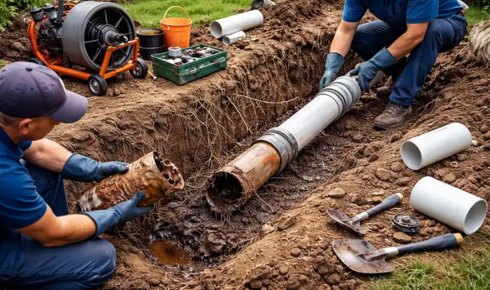
This is where professional sewer line repair can make a real difference. Repairing a damaged section early may prevent a full system failure later. In many cases, a plumber can inspect the line with a camera, find the exact trouble spot, and recommend a repair that makes sense instead of guessing. That saves time, reduces unnecessary digging, and gives the homeowner a clearer picture of what is actually happening.
The key is not waiting until drains stop completely or sewage backs up into the house. By then, the situation is usually more stressful, messier, and more costly.
Common Signs Something Is Wrong
Sewer line trouble does not always announce itself clearly. Sometimes the first clue is a drain that keeps clogging no matter how often it is cleaned. Other times, several drains in the home slow down at the same time. Toilets may gurgle, tubs may drain slowly, or water may come back up in strange places.
Outside, the signs can be just as telling. A patch of grass that looks unusually green, a sunken area in the yard, or a persistent sewer odor near the property can all point to underground trouble. Homeowners may also notice wet soil when there has not been much rain.
It is tempting to treat these things as random annoyances. But when the same issue keeps returning, the sewer line may need more than a quick fix.
When a New Line Is Needed
Not every project starts with an emergency. Sometimes a home needs a sewer connection as part of a new build, property addition, or major renovation. In those cases, proper planning matters as much as the pipe itself. The slope, depth, pipe material, local code requirements, and connection point all need to be handled correctly.
A well-planned sewer line installation helps the system work smoothly from the beginning. Poor installation, on the other hand, can lead to repeated clogs, drainage issues, and premature pipe failure. It’s not the kind of job where shortcuts pay off. The underground work may be out of sight, but it affects the comfort and function of the entire home.
Good installation also includes careful site preparation. Utility lines must be located, soil conditions considered, and the final path planned to avoid future problems where possible. It may not be the most glamorous part of a property project, but it is one of the most important.
Repair or Replace? Knowing the Difference
One of the biggest questions homeowners face is whether the line can be repaired or if replacement is the better long-term choice. The answer depends on the pipe’s age, material, condition, and how much of the line is damaged. A single cracked section may be repairable. A line with multiple failures, severe corrosion, or major root intrusion may not be worth patching again and again.
In older homes, sewer line replacement may be the smarter investment when the existing pipe has reached the end of its useful life. While replacement sounds like a bigger step, it can reduce ongoing service calls and bring peace of mind. Modern materials are often more durable, and newer methods may limit the amount of disruption compared with traditional digging.
A professional inspection is important here. Without looking inside the line, it is hard to know whether the problem is isolated or part of a larger failure.
The Value of a Careful Inspection
A camera inspection is one of the most useful tools in sewer line work. It allows the technician to see blockages, cracks, offsets, root intrusion, and pipe condition without immediately opening the ground. This gives homeowners better information before making a decision.
It also helps avoid unnecessary repairs. Sometimes the issue is a clog that can be cleared. Other times, the camera shows damage that explains why the same drain problem keeps coming back. Either way, facts are better than guesswork.
Protecting the Home for the Long Run
Sewer line work may not be exciting, but it is deeply practical. It protects the home, the yard, and the people living inside. Whether the job involves repairing a damaged section, installing a new connection, or replacing an aging line, the goal is the same: reliable drainage without constant worry.
The best approach is simple. Pay attention to early warning signs, get a proper inspection, and choose a qualified team that explains the options clearly. A sewer line may be buried underground, but when it works well, everyday life above it feels a whole lot easier.

Admin
A contributor to Blognary’s independent wall of business, technology, finance and marketing perspectives.
VIEW ALL ARTICLES